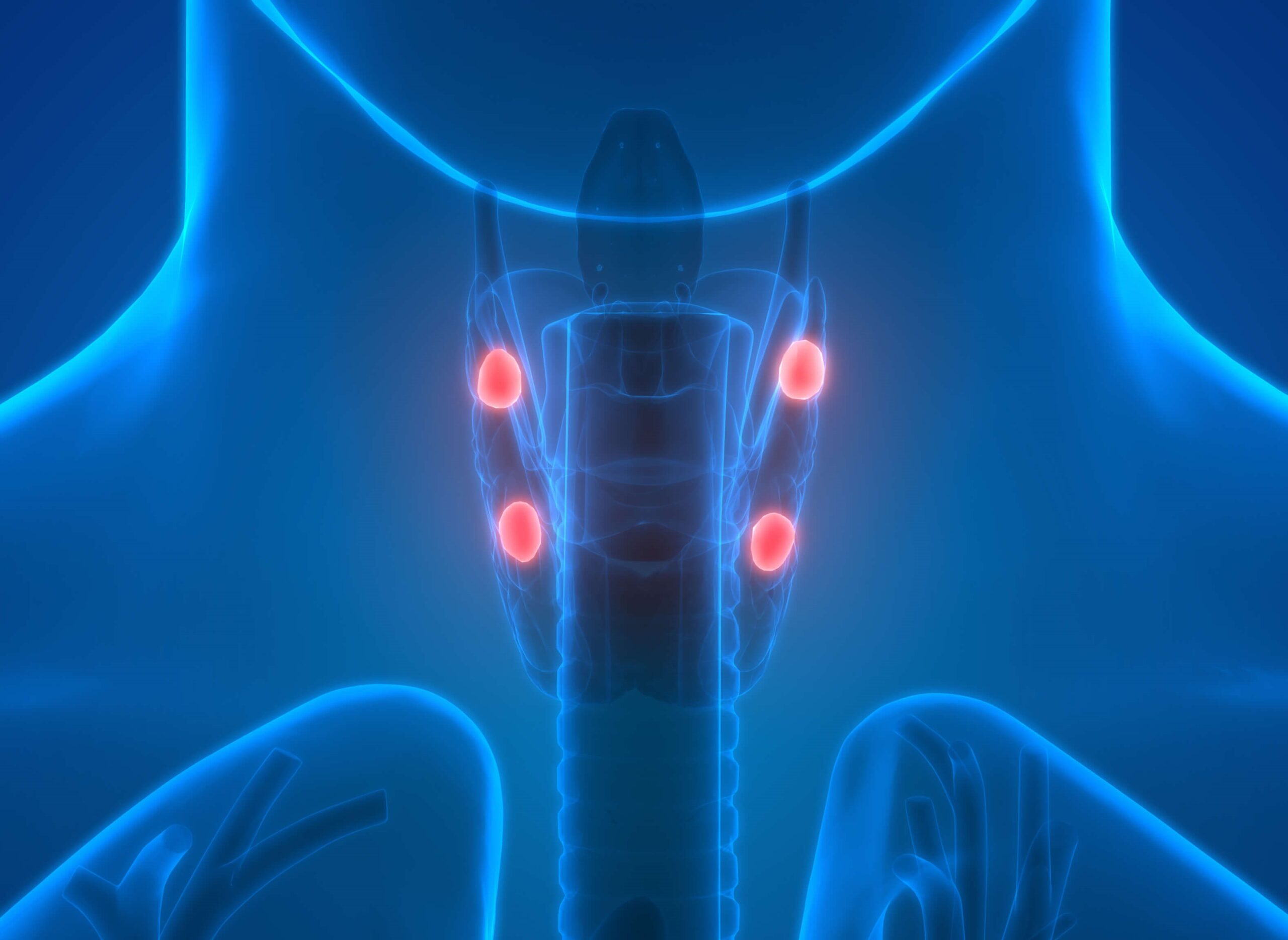
Hyperparathyroidism

Dr Jesse Hu
Senior Consultant General Surgeon, Breast, Thyroid & Endocrine Surgery

Introduction to Hyperparathyroidism

Hyperparathyroidism occurs when one or more of the parathyroid glands become overactive, resulting in excessive production of PTH. This leads to increased levels of calcium in the blood (hypercalcemia), which can cause various symptoms and complications.

What Is Hyperparathyroidism?

Hyperparathyroidism is a disorder of the parathyroid glands, which are small endocrine glands located in the neck. These glands produce parathyroid hormone (PTH), which regulates calcium, vitamin D, and phosphorus levels in the blood and bone.

Causes of Hyperparathyroidism

Primary hyperparathyroidism is the most common form and occurs due to issues within the parathyroid glands themselves:

Adenomas: These benign tumours are the most frequent cause, resulting in one or more glands producing excess PTH.

Hyperplasia: This involves an increase in the number of cells within the parathyroid glands, leading to increased hormone production.

Carcinoma: Although rare, cancer of a parathyroid gland can lead to the overproduction of PTH.

Secondary hyperparathyroidism is a response to other medical conditions that cause low calcium levels in the body:

Chronic Kidney Disease: Chronic kidney disease can impair the kidney’s ability to convert vitamin D to its active form, leading to decreased calcium absorption and increased PTH production.

Vitamin D Deficiency: Lack of vitamin D reduces calcium absorption from the diet, which can trigger an increase in PTH output.

Dietary Calcium Deficiency: Insufficient dietary calcium can also lead to elevated PTH levels as the body tries to maintain normal calcium levels in the blood.

Tertiary hyperparathyroidism often develops in individuals with prolonged secondary hyperparathyroidism, particularly in those with end-stage renal disease who have had a kidney transplant.

Symptoms of Hyperparathyroidism

Hyperparathyroidism can present with a variety of symptoms, largely due to high calcium levels in the blood.

Fatigue and Weakness

Excessive fatigue and general weakness are common, often due to the body’s inability to regulate calcium properly.

Bone and Joint Pain

Elevated PTH levels can lead to bone resorption, which weakens bones and may result in pain or fractures.

Increased Thirst and Frequent Urination

High calcium levels can cause the kidneys to work harder, which often leads to increased thirst and urination.

Nausea, Vomiting, and Loss of Appetite

Digestive disturbances are common as hypercalcemia can affect the stomach and intestines.

Mood Changes

Patients may experience depression or irritability as a result of the disorder.

Cognitive Impairments

Difficulty concentrating or experiencing confusion can significantly impact daily functioning.

Diagnosing Hyperparathyroidism

Diagnosing hyperparathyroidism typically involves a combination of clinical evaluation, blood tests, and imaging studies.

Medical History and Symptoms: The doctor will review the patient’s medical history, symptoms, and previous blood test results indicating altered calcium levels.

Physical Examination: Although physical signs are not always prominent in hyperparathyroidism, the doctor might look for signs of bone tenderness or abnormalities.

Calcium Levels: This test measures the level of calcium in the blood, which is typically elevated in hyperparathyroidism.

Parathyroid Hormone (PTH) Levels: An elevated PTH level in the presence of high calcium levels is a key indicator of hyperparathyroidism.

Vitamin D Levels: Low vitamin D levels can contribute to secondary hyperparathyroidism.

Ultrasound of the Neck: This can help identify an enlarged parathyroid gland or the presence of a tumour.

Sestamibi Scan: A specialised scan that uses a small amount of radioactive material to visualise parathyroid glands, particularly useful in locating adenomas.

MRI or CT Scans: These provide detailed images of the neck and chest, especially if surgery is considered or if ultrasound and sestamibi scan results are inconclusive.

Treatment Options

Treatment for hyperparathyroidism is tailored to the individual’s symptoms, the severity of the disease, and the underlying cause. The main treatment strategies include medication and surgery.

Medication

  • Calcimimetics: These drugs can be used to treat hyperparathyroidism by mimicking calcium in the bloodstream, thus helping to lower PTH production.
  • Bisphosphonates: Used primarily to manage bone loss and reduce the risk of fractures in patients with hyperparathyroidism.
  • Vitamin D Supplements: In cases of secondary hyperparathyroidism due to low vitamin D levels, supplements can help regulate calcium and phosphate balance.

Surgery

  • Minimally Invasive Parathyroidectomy (MIP): Minimally invasive parathyroidectomy is a preferred surgical option due to its less invasive nature and quicker recovery times. This technique involves a small incision in the neck, typically less than an inch long, through which the surgeon removes the overactive parathyroid gland(s). MIP is often guided by preoperative localization studies and intraoperative PTH monitoring to ensure complete removal of the problematic gland(s).
  • Standard Parathyroidectomy: Standard parathyroidectomy, also known as bilateral neck exploration, is a more extensive surgical approach. It involves a larger incision and exploration of all four parathyroid glands. This method is typically used when preoperative imaging does not clearly localize the overactive gland(s) or when multiple glands are suspected to be overactive.
  • Focused Parathyroidectomy: Focused parathyroidectomy is similar to MIP but with a more targeted approach. This surgery is performed using precise preoperative imaging to identify the exact location of the overactive gland(s). The surgeon makes a small incision directly over the affected gland, minimizing tissue disruption.
  • Reoperative Parathyroid Surgery: Reoperative parathyroid surgery is necessary for patients who experience persistent or recurrent hyperparathyroidism after an initial surgery. This procedure is more complex due to scar tissue from the previous surgery and requires a highly experienced surgeon.

Choosing the Right Surgical Option

The choice of surgical technique depends on various factors, including the number and location of overactive glands, the patient’s overall health, and previous surgical history. Preoperative imaging and intraoperative PTH monitoring are important for the success of the surgery. Consulting with an endocrine surgeon can help determine the most appropriate treatment plan for each individual patient.

Are Your Symptoms Affecting Your Quality Of Life?

Consult us for a comprehensive evaluation & personalised treatment plan.

Complications of Untreated Hyperparathyroidism

Untreated hyperparathyroidism can lead to a variety of complications, largely due to prolonged high calcium levels in the blood.

Osteoporosis

Prolonged elevation of PTH can result in increased bone turnover, leading to weakened bones and a higher risk of fractures.

Kidney Stones

Excess calcium can lead to the formation of kidney stones, which can cause severe pain and blockages in the urinary system.

Kidney Damage

Chronic high calcium levels can also impair kidney function over time, potentially leading to chronic kidney disease.

Cognitive Impairments

High calcium levels can affect the nervous system, leading to issues such as confusion, memory loss, and difficulty concentrating.

Mood Disorders

Patients may experience depression or mood swings as a direct effect of the calcium imbalance in their body.

Hypertension

Hypercalcemia can increase blood pressure, posing a risk for hypertension.

Cardiac Arrhythmias

Abnormal heart rhythms can occur if calcium levels affect the electrical impulses of the heart.

Dr Jesse Hu

Dr Jesse Hu

Senior Consultant General Surgeon, Breast, Thyroid & Endocrine Surgery

Dr Jesse specialises in managing both benign and malignant breast and thyroid conditions, which also includes breast pain, breast lumps, breastfeeding problems, neck lumps, amongst others.

Her dual expertise in cancer removal and plastic surgery techniques expands the design of individualized treatments, leading to holistic patient outcomes.

Dr Jesse was part of the teaching faculties of both NUS Yong Loo Lin School of Medicine and Lee Kong Chian School of Medicine, where she teaches and mentors the next generation of medical students and trainee doctors.

  • Surgical training at NUS School of Medicine
  • FRCS (Fellow of the Royal College of Surgeons) Edinburgh, UK in 2014
  • Completed 2 Health Manpower Development Program (HMDP) fellowships at Oxford University Hospital, UK in 2016

Dr Jesse is recognized as an authority in breast cancer and thyroid surgery and a sought-after conference speaker.


Our clinics are under the following

insurance panels

For Singaporeans, Singapore Permanent Residents and Foreigners.
Please speak to our friendly clinic staff about using your insurance plans.

Reach Out To Us

We are committed to providing a one-stop experience, where you’ll receive a meticulous consultation and high-quality service in a comfortable environment.

Get Started

Book An Appointment


    image

    For faster response, Call Us

    (65) 6733 3383


    Hyperparathyroidism

    Frequently Asked
    Questions

    How does hyperparathyroidism affect pregnancy?

    Hyperparathyroidism can lead to high calcium levels, which can be dangerous for both the mother and the developing fetus. It is essential to manage calcium levels carefully during pregnancy to prevent complications.

    Is hyperparathyroidism hereditary?

    Certain forms of hyperparathyroidism, particularly those associated with familial syndromes like multiple endocrine neoplasia, can be hereditary.

    How often should someone with hyperparathyroidism have medical check-ups?

    The frequency of medical check-ups depends on the severity of the disease and the treatment method, but typically every 6 to 12 months is recommended.